10 years of Elsevier Pride
June 17, 2024We’ve made big strides in workplace inclusion for LGBTIQ+ colleagues — and our journey continues.
June 11, 2024
By Michiel Kolman, PhD
In the beginning
Ten years after the launch of Elsevier Pride, this is an excellent moment to reflect on a decade of LGBTIQ+ workplace inclusion at Elsevier. Launched simultaneously in Amsterdam and Philadelphia, Elsevier Pride has since expanded to have 15 chapters around the world. Over the past decade, we have seen a flurry of Pride activity and advocacy, with great progress made and major challenges overcome — and still important work to do going forward.
Ten years ago, we might have started talking about inclusion and diversity (I&D) in the workplace, but we were at the start of our journey, and the conversation wasn’t as prominent as it is now. When I asked my LGBTIQ+ colleagues at that time how they experienced working at Elsevier, the answers were positive overall, but we also did not know exactly what a truly LGBTIQ+ inclusive workplace could look like, let alone how we could achieve it.
Starting local, going global
We launched the first Elsevier Pride chapters in Amsterdam and Philadelphia. Over the years, the global network was expanded. Today, there are Pride chapters across Europe, the US, Latin America and Asia. We started our Rio de Janeiro chapter after a colleague was a victim of homophobic violence on the streets of Rio. Our latest addition is the chapter in Beijing, which was launched last year.
As Employee Resource Groups (ERGs), these employee-led Pride chapters aim to create an LGBTIQ+- inclusive workplace, providing a welcoming environment where LGBTIQ+ people can truly be themselves and be valued. Membership is open to all, including allies. All local chapters have their own budget and are encouraged to organize Pride events.
The Pride chapters have been the central engine of Elsevier Pride, tapping into employees’ passion and support for the LGBTIQ+ movement at work and in the communities where Elsevier is based. Activities have ranged from educational events (e.g., on intersectionality, PrEP, and intersex people) and more social events that are also fundraisers. We saw many firsts: for example, the first time we organized Pride Bingo hosted by a drag queen in the Amsterdam canteen, which was soon known as the annual Drag Queen Bingo event, and the first time we hosted the LGBTIQ+ refugees on a harbor cruise in Amsterdam, creating a safe space for the queer refugees from countries with a hostile LGBTIQ+ environment.
A structural long-term approach
A decade ago, we also joined the Amsterdam-based international NGO Workplace Pride, which has turned out to be an excellent partnership. We have been participating in the Workplace Pride Global Benchmark for 10 years, and that has helped us tremendously to systematically improve our LGBTIQ+ workplace inclusion. The figure below shows the progress we have made in all eight areas. Meanwhile we have (near) perfect scores in seven of these areas, which has required hard work over many years.
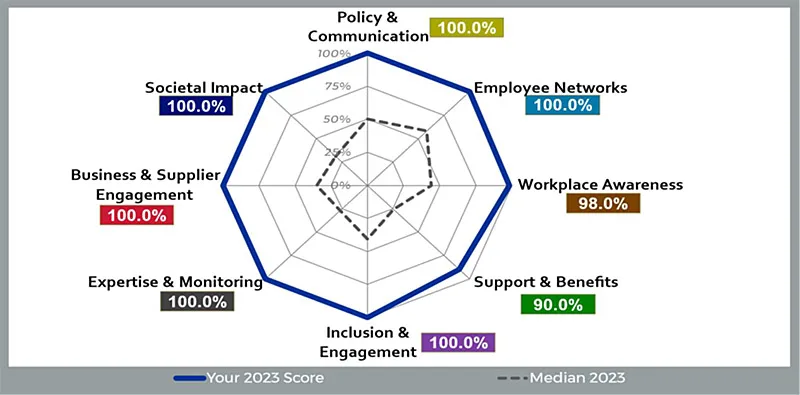
Over the past decade, Elsevier has made progress in all eight areas of the Workplace Pride Global Benchmark, as shown by the solid blue line. These are the scores from 2023.
Below is the Elsevier score for the Workplace Global Benchmark, which went from average to below average, before rising to surpass 90% in the past four years. Essentially, this trend reflects a structural change in the company culture; research shows that this typically takes about eight to 10 years, so we are only a little bit faster in our progress than the overall standard.
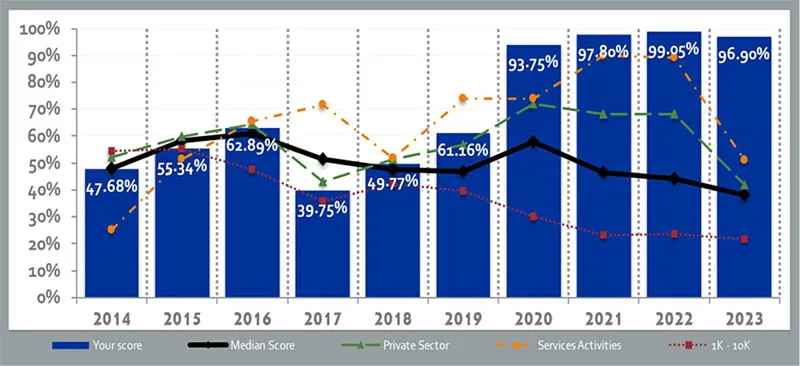
This chart shows the progress of Elsevier and parent company RELX in the Workplace Pride Global Benchmark (shown by the blue histograms).
Also, our colleagues in the US participate in the HRC Corporate Equality Index with our parent company, RELX, and they now achieved the perfect score: 10 across the board!
Two key areas of Workplace Pride
While there are eight areas in the Workplace Pride Global Benchmark, I’m going to focus on two key areas: Inclusion & Engagement and Societal Impact.
Inclusion & Engagement
Over the last decade, we have seen significant change on I&D at Elsevier. Two aspects really jump out.
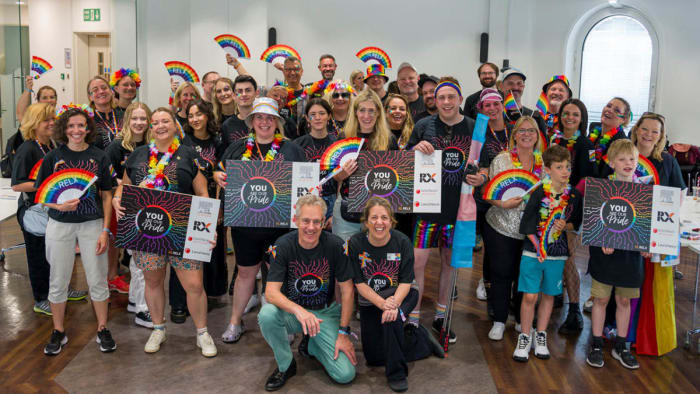
First the very committed executive leadership for the I&D agenda, including the Pride dimension. Our CEO, Kumsal Bayazit, has been extremely supportive of I&D — and certainly Pride — from the moment she joined Elsevier in 2019. Last year, we participated in the London Pride Parade, and Kumsal joined the 50 RELX colleagues to walk with us and show our commitment to the LGBTIQ+ community at work and beyond (see the picture at the top of the page). The strong support from the top combined with the passion and activism of the Pride groups are a very powerful way to achieve positive change over time.
The second aspect that stood out for me is the dedicated I&D team and energetic leader who rolled out excellent programs around psychological safety and inclusive leadership. This created an environment in which Pride could thrive. Pride is also featured annually in our townhall aimed at all 8,700 Elsevier employees worldwide and hosted by our CEO.
During the last decade, we not only saw LGBTIQ+ inclusion in the workplace but we also ... Read more>>> 10 years of Elsevier Pride