Creating safe spaces: navigating sports as a visibly queer person
February 20, 2024“What we're doing is we're building that empathy for what can be a really nerve-wrecking experience - enjoying live sports. That's what it's about.”
Emily Hamilton, VP Strategic Change at RS Group, spoke to myGwork about overcoming the history of homophobia in sports, and navigating sport activities as a visibly queer person. Talking about her journey with Harlequins, a Premiership Rugby Club in the UK, she discusses why building empathy is key to creating a safe space.
I came from a rugby family – my dad played rugby for Wasps. And rugby was always my sport because part of its uniqueness in that people of all body shapes and sizes can play together on the same team. Rugby enabled me to have a sport that I could play where it was fair because you can have tiny kids, you could have big kids, and everyone had their own position and their own part to play. I got a lot from rugby – and in fact, I played from the age of 6 to a pretty good level.
Rugby has always had this sort of ethos of being a very gentlemanly sport, even though it's quite rough. And yet, you know, there's always been a sort of underlying homophobia within rugby, which didn't really get challenged until the mid-1990s when the first gay rugby club was founded in the UK, which is called the King's Cross Steelers.
And it happened at that time, I was at the end of my playing career, I happened to share a ground with the Steelers. I was still closeted at the time, and they were the first ones to break cover and say, “This is a gay rugby club and we're here to, you know, have a place for us to play”. And I remember the homophobia. I remember the jokes. I remember showering and people saying, “oh don't go in the shower while they're in there, don't drop the soap”, all that sort of nonsense.
So, Harlequins is a Premiership Rugby club in the United Kingdom founded just over 150 years ago, so one of the oldest teams in the in the league. And I've been going to Quins on and off since 1983, and I became a season ticket holder about 20 years ago. And 4 1/2 years ago, when I came out, there were lots and lots of questions about how this works. How am I going to go to work? How am I going to navigate family? To me, one of the questions was: How do I do rugby?
I had to face up to the fact that my season ticket was changing because my name had changed. There was no online form, so I had to phone the club and say, “look, there's a change in circumstances. My name's changing. I'm going through gender re-assignment. Can you change my name from ‘him’ to Emily?” And the club was really lovely. And they made no song and dance about it. Just, “oh yeah, of course. Thats absolutely no problem. We'll get that card reissued for you, and welcome back and everything else.”
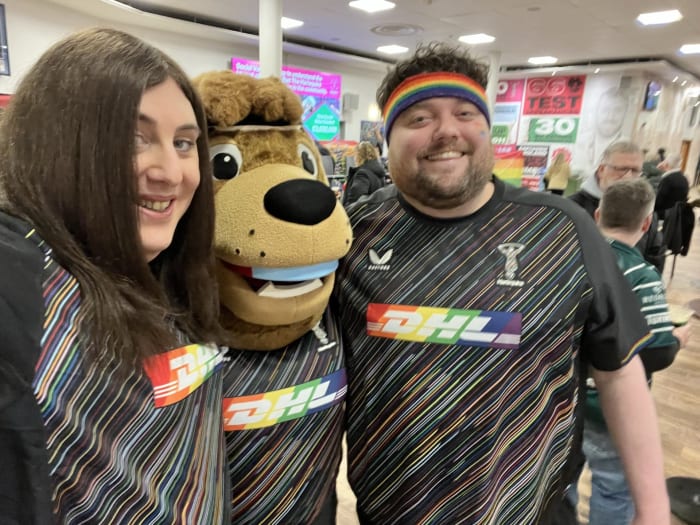
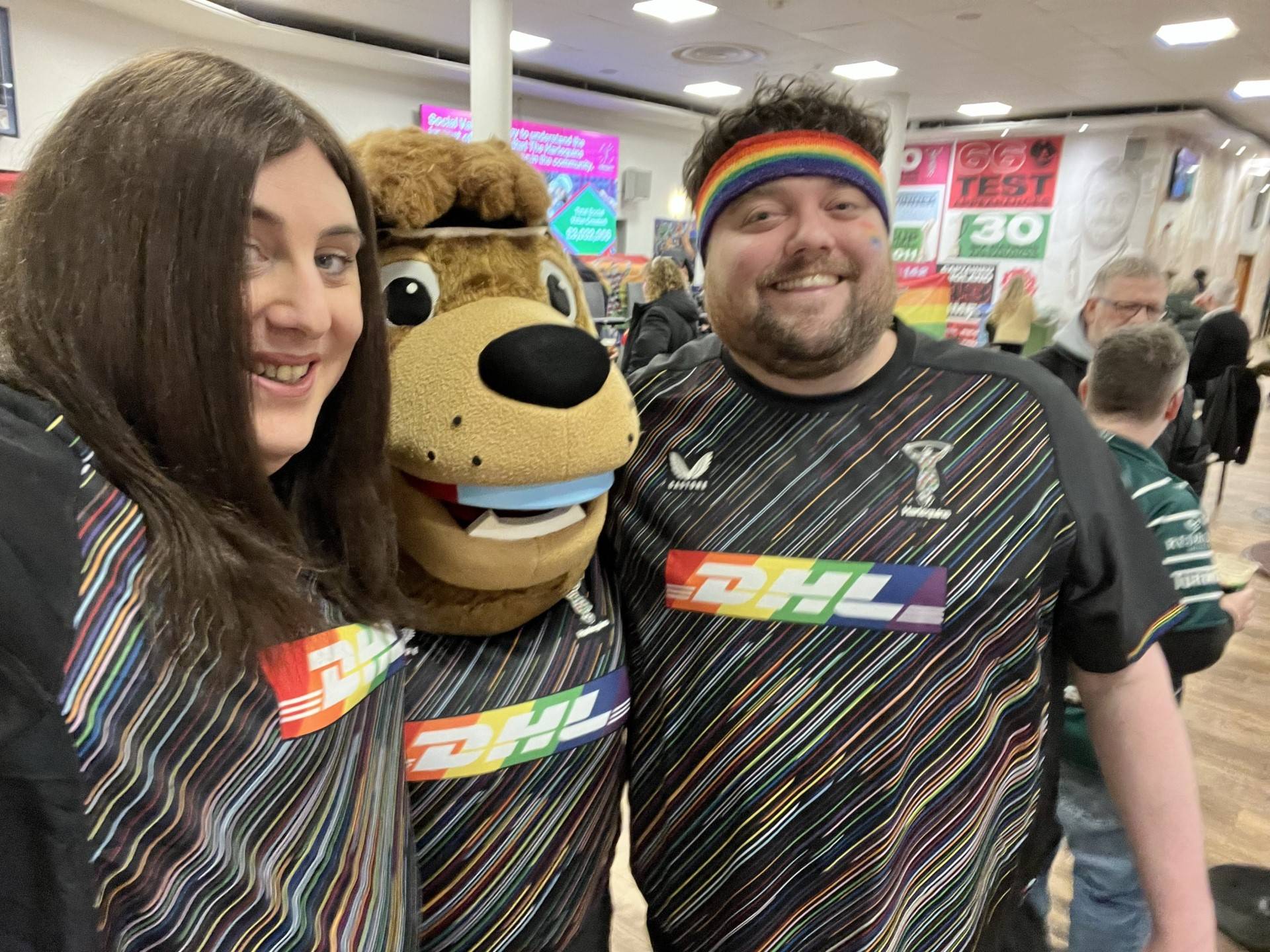
And that gave me a bit of an inkling that Quins were going to be OK. The club hosted its first Pride fixture which was led by a then employee who was gay himself and wanted to have one fixture where we recognise the LGBT community and the strides that have been made. They invited The Kings Cross Steelers, the first gay club who are not far from Harlequins geographically, and brought them in to have the match. Not long after that, I went through my social transition, and I came up with an idea that I thought we should have an LGBTQ supporter’s association in the UK – and by coincidence, the thinking of my friend at the club was exactly the same. Every Premiership soccer club, every championship soccer club, pretty much has an LGBTQ sports association. Within rugby, there were none. There was nothing at all