Dealing With Disabilities - There Isn't Just One Definition
January 13, 2022What do you think about when
you hear that word? Are you imagining a particular disability? What do the
people you’re picturing look like?
Disability is a big word with
a plethora of meanings, but people’s perceptions often cover just a small
slither of the conditions, impairments and limitations that this umbrella term
encompasses.
People with disabilities
aren’t a tiny community that you’ll rarely cross paths with; in fact roughly 21% of the UK population have a disability according
to Scope. That covers people with visual or hearing impairments, learning
difficulties, mental health conditions, epilepsy, cerebral palsy, amputations,
spinal cord injuries, arthritis, dwarfism, Tourette syndrome and so much more
that I can't even begin to list.
While the scope of what it
means to have a disability is broad, everyone’s experience is unique and should
be considered on a case-by-case basis. Some disabilities may require specific
adaptations in work or life, but for many this is just part of their day-to-day
and has been for a long time, so the affected individuals don’t need special
treatment in every aspect of their lives. Remember, they’re a person with disabilities, not a disabled
person.
A few colleagues have chosen
to share their experiences with disabilities, whether it is something that
affects them directly or affects a loved one, to help provide some insights
into the impact it can have on everyday life.
Hearing
Difficulties by Mark Siddall
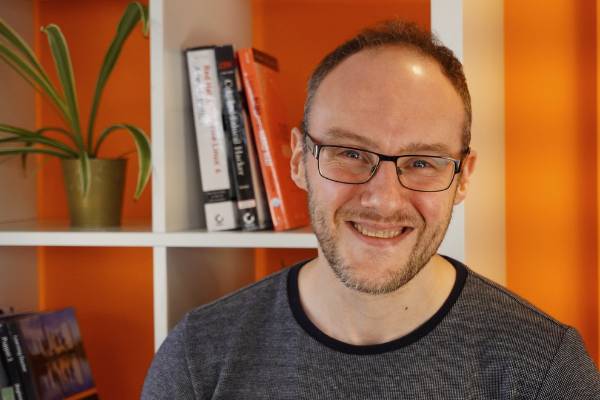
When I was 7, my Mum thought
I was ignorant. I would never respond to her when she spoke to me or feel
comfortable conversing with groups of people. Apparently, the only time I would
hear her was when she asked if I wanted a “Mars Bar”.
It was only when I had a
hearing test at school that she, and I, found out that I was actually hard of
hearing and would need a Hearing Aid (and a Phonic Ear, for a while) - and it
explained a lot. Knowing about my disability not only gave me the devices to
help, but access to resources and learning techniques, such as lip reading and
body language reading.
Unfortunately, there was also
a stigma around being hard of hearing / deaf (even though it is no different to
wearing glasses to help with bad eyesight). That was one of the main reasons
that I stopped wearing my hearing aid, along with working in a very loud
environment (the right of passage bar job).
Today, I’ve learnt to live
with my hearing loss so that it doesn’t affect my day to day life, in work or
in my free time. But, there are some things that I still find difficult
(especially in the office):
●
A loud environment - Someone with hearing
difficulties is probably trying a lot harder than you think to focus on the
conversation. This can be made even harder in noisy environments where there
might be a lot of other conversations going on, loud machinery, traffic, or music.
This is even worse for hearing aid users as they simply amplify all sound,
instead of allowing you to focus on the one sound you want to listen to.
●
Being on the outside of a
conversation - You might not know this but I also have what I refer to as a
good ear (even though it only has 50% of normal hearing). That is why I always
try to position myself to the left of a bank of desks, conversation or a
person, so that my better, right ear is closer to what I want to focus on.
●
Not being able to talk face
to face
- How hard have you found it trying to listen to people wearing masks recently?
This is because not only is the volume and quality of the sound muffled, but
because you cannot pick up on facial cues, such as reading lips and emotion.
People that are hard of hearing rely on these techniques and often feel a lot
more comfortable talking one on one rather than in a large group, and also
struggle when someone turns away from them in the middle of a conversation.
●
Tripping over words - Speech development and
hearing go hand in hand. That is why some people who are deaf or hard of
hearing can have speech impediments such as lisps, stutters and mumbling. I
struggled with all of these growing up (which doesn’t help when you can already
feel isolated from a conversation) but, even today, I can sometimes trip over
my words and need a moment to compose myself.
● People shouting or talking slowly - When I wore my hearing aid
growing up, people would shout or talk slowly to me. It’s was really insulting
- I’m hard of hearing, not stupid! Unfortunately, it is still a stigma that
hearing aid wearers regularly face. Just talk clearly and directly, at your
normal volume and pace, and we’ll understand you (or ask you to repeat
yourself).
Multiple
Sclerosis (MS) by Charlotte Batters
MS is an incurable condition
caused by the immune system mistakenly attacking the brain and nerves. Although
it can be managed, it does shorten life expectancy and usually goes through a
number of stages which result in increasingly reduced mobility. My grandma was
diagnosed with MS in her 40’s. I’ve spent my life seeing her progress through
the stages. She’s been through crutches, part-time manual wheelchair use,
full-time manual wheelchair use, and is now in an electrical wheelchair as the
only remaining movement she has is one hand and facial movements.
Although my tips seem
obvious, you’d be surprised what people do when they don’t think about it…
Speak
directly to them:
90% of the time, people ask
me what she needs. Also, don’t assume they need your help to do anything and
everything. I’d suggest you do the opposite and assume they don’t need your
help at all unless you see them struggling, then ask whether they need any
help.
Don’t
move their chair:
Is the chair getting in your
way? Ask them if they can move slightly. Just like you wouldn't pick a stranger
up and place them to one side to get past them, don’t think it’s ok to just
grab the handles and move them.
Tables
tables tables:
The world isn’t designed for
disability. Lots of tables aren’t high enough for wheelchairs to comfortably
fit under, so if you’re booking a meal out ask the restaurant to save a table
high enough. If you’re booking a meeting room, make sure the table is high
enough. And day to day desk setups will probably need some adjustment too.
Wheelchairs
don’t make you deaf:
Yes, some wheelchair users
may have illnesses which do impact their hearing. But don’t assume from the off
that everyone in a wheelchair needs extra adaptations from you.
Sit
down:
If you’re standing up whilst
talking to them, they are looking up, which - FYI - is much harder work on the
neck than it is to look down. You could crouch. But I’d suggest that you sit
where possible. It’s much more casual and sometimes crouching can come across a
little patronising.
Don’t
lean on their chair:
It's the equivalent of just
resting an arm on someone's shoulder as you’re talking to them… don’t lean on
their arm rests, don’t lean on their handles, don’t lean on their headrest.
It’s invasive.
Endometriosis
by Catherine Taylor
Endometriosis is a chronic
condition where cells similar to the ones in the lining of the womb are found
elsewhere in the body. This causes inflammation and chronic pain which can
affect other pelvic organs and fertility. Having surgery can remove the growths
but it is highly likely that they grow back within a few years.
In the UK, it takes on
average 7.5 years to diagnose endometriosis. From personal experience,
previous doctors often mis-diagnose or even dismiss the pain and “say it's just
a painful period, take a painkiller.” After perseverance, I eventually saw an
endometriosis specialist gynaecologist who gave me the diagnosis very recently.
Despite feeling scared about what the future holds, I was relieved to finally
have a diagnosis.
Endometriosis affects each
woman in a different way and for me, it's more than just severe pain during my
period once a month; it affects me every day. From fatigue and sciatica pain to
anxiety, it can consume your thoughts each day.
Over time, I have found ways
to cope with the condition by using a walking aid, taking painkillers, heat
pads and more recently, a nerve stimulation device.
One of the things I have learnt throughout my journey is the importance of recognising you can’t do everything yo