
LGBTQ+ History Month 2024: panel recap
February 29, 2024In a powerful and enlightening event hosted by myGwork this month, a panel of LGBTQ+ professionals and allies came together to shed light on the importance of understanding and celebrating LGBTQ+ history. The panel, consisting of Jamie Brown from Financial Times, Nik Dutt from The Trade Desk, Angelique Piwinski from Worklife Training Institute, Jonathan Watts from JPMorgan Chase & Co, and Aderonke Apata from African Rainbow Family, provided valuable perspectives and personal anecdotes related to LGBTQ+ History Month.
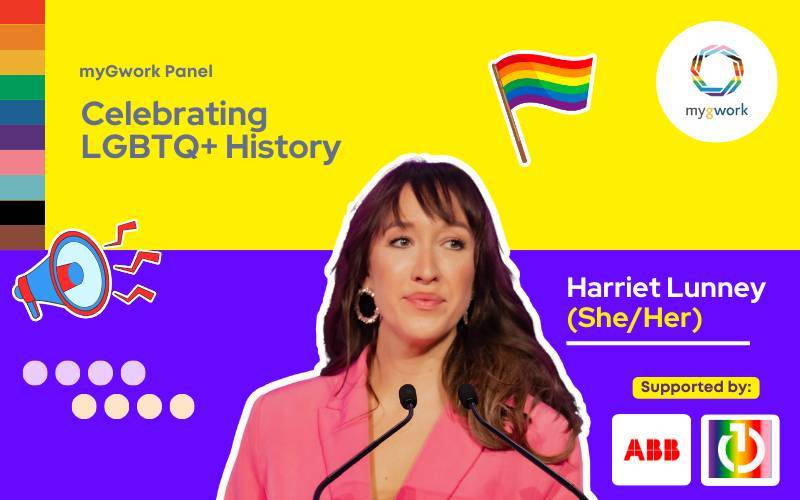
Supported by ABB and The Trade Desk, the panel provided an insightful platform for dialogue and reflection. The panelists' diverse perspectives and empowering messages served as a reminder of the resilience, history, and significance of the LGBTQ+ community. Harriet Lunney, the host, set the tone for the discussion by emphasizing the significance of listening to the lived experiences of LGBTQ+ people, particularly in a time marked by rising hate crimes and discrimination. She asked the panelists why they believe it is important to commemorate LGBTQ+ history, and what inspires them.
Angelique Piwinski, a historian and advocate who was present during the Stonewall Rebellion, delivered a poignant message about the essence of studying LGBTQ+ history. She highlighted the importance of learning from past mistakes to better understand current challenges faced by the LGBTQ+ community. Piwinski eloquently expressed how LGBTQ+ history is intertwined with humanity.
“Humanity is flawed,” she said. “We make the same mistakes, over and over again. It may skip a generation or two, but we're going to make the same mistakes. So, if we don't study history, we will not understand what's happening. The history of LGBTQ+ people goes back to the beginning of humankind.”
Aderonke Apata shared a personal reflection and much-overlooked perspective on the intersectionality of race and LGBTQ+ identity. By debunking the myth that homosexuality is ‘un-African’, she shed light on the historical roots of LGBTQ+ presence within African communities, emphasizing the impact of colonial legacies on LGBTQ+ criminalization.
“My inspiration actually comes from the fact that there are many people of color who have been fed with something that is untrue. The notion that homosexuality is ‘un-African’ - which is not true. Homophobia is un-African,” Aderonke elaborates. “When we got colonized by the British Empire, they came and then they brought in this law that criminalizes LGBTQ+ people. So, that tells me that they must have found LGBTQ+ people in our lands before, in order to come up with that. That means that it has always been part of us. That's who we've always been from the beginning. The fact that we've been criminalized is just not right and the best thing that we can do is celebrate within ourselves.”