Preserving and Empowering LGBTQ+ Lives With Maps
November 10, 2022We often think of maps as tools that help us get from A to B. While that might be one of their most useful functions, maps can be so much more than that — especially for communities that have historically been marginalized and underrepresented. A story by Snigdha Bansal at TomTom
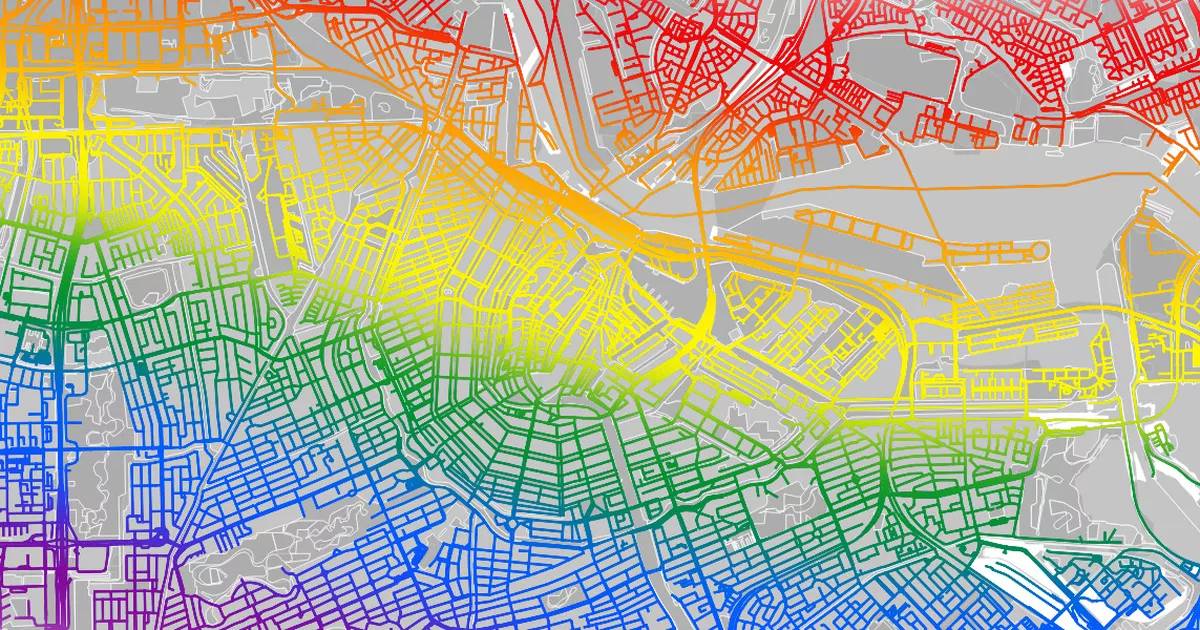 For LGBTIA+ people, location data and maps are often less about taking them where they want to go and more about telling them where they can go. Apart from pointing out safe spaces and those they must avoid, maps also serve as proofs of the existence of the queer community — especially in a world that repeatedly tries to erase and overwrite their history.
Maps targeted towards queer people have been around for a long time. There have been many attempts to chronicle queer lives and history using cartography. One such initiative is the Damron Address Books — a travel guide for gay men first published in the 1960s and in circulation as recently as 2020.
Created by Bob Damron, a gay businessman keeping track of his experiences travelling around the US, the guides came to resemble the historic 'Green Book' that helped Black travellers find safe spaces from 1936 to 1967. From 1964 to 1980, Damron helped queer people across the US find safe spots.
Immortalizing queer history on maps
In today’s digital world, interest in physical guidebooks is waning, as is the need for an easy-to-hide pocketbook in an America where it’s no longer illegal to be gay. Now, Damron’s guides are being digitized in the form of a searchable map by Eric Gonzaba, assistant professor of American studies at CSU Fullerton, and Amanda Regan, assistant professor of History at Clemson University. Mapping the Gay Guides visualizes “the growth of queer spaces between 1965 and 1980” by associating geographical coordinates with each location mentioned in the Damron Address Books.
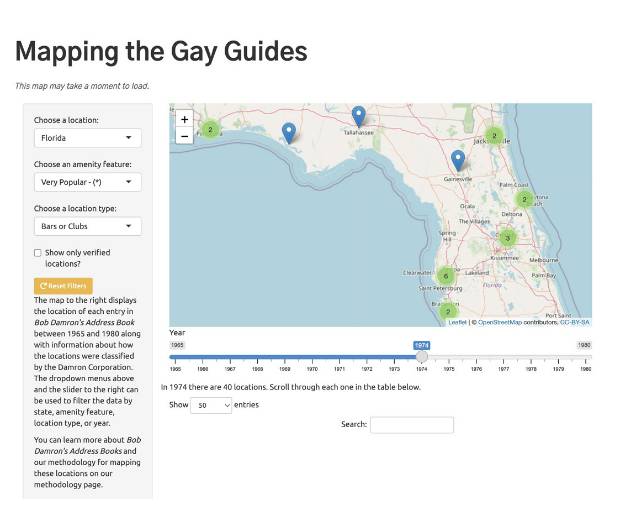
Through a searchable digital map, Mapping the Gay Guides provides a glimpse into the lives and growth of queer communities in the USA between 1965 and 1980. Credit: Mapping the Gay Guides.
As people begin to find communities online, the immediate need for physical guides might have diminished, but they can now serve as vignettes of the lives of queer people in the US before the Internet.